Showing posts with label Fascial Stretching. Show all posts

Friday, March 21, 2014

Fascial Pec Minor 'Arm Line/Lung Meridian' Stretching


Image from 'Trail Guide to the Body; 2nd edition, by Andrew Biel'

I recently put up two clips on Youtube; both of which aim to bring sensory awareness, muscular activation and soft tissue re-modelling stretch to the tissues of/around/involved with the anatomical structure that is pectoralis minor.   

This muscle is notoriously tricky to isolate with a stretch, for a lot of people; and my 'Practitioner Hanging Fascial Pec Minor Stretch' partner stretch came about from my playing-exploring with ways to find a tangible and workable sensation of this region in my own body.  I am really loving this stretch at the moment (and a couple of other hanging stretches); as it works great solo and *GREAT* as a practitioner (partner) exercise. 

The second video is one starring Cherie Seeto (Sydney Stretch Therapy) has also come up with nice solo stretch (that gets pec minor and the clavicular fibres of pec major very nicely for me) - nick-named 'The Kebab'.(!)

This one works really well for me as a more active 'contract-move' eccentric style stretch, where the tissues are kept lightly contracted via a straight armed humeral flexion movement and slight elbow flexion; utilizing the breath to change the stretching vectors and release tension more specifically on the tissues attached to the ribcage (as opposed to a more standard contract-relax Stretch Therapy approach). Being a secondary breathing muscle, the use of various directed breathing techniques as enhancers to the stretch should come as no surprise. 
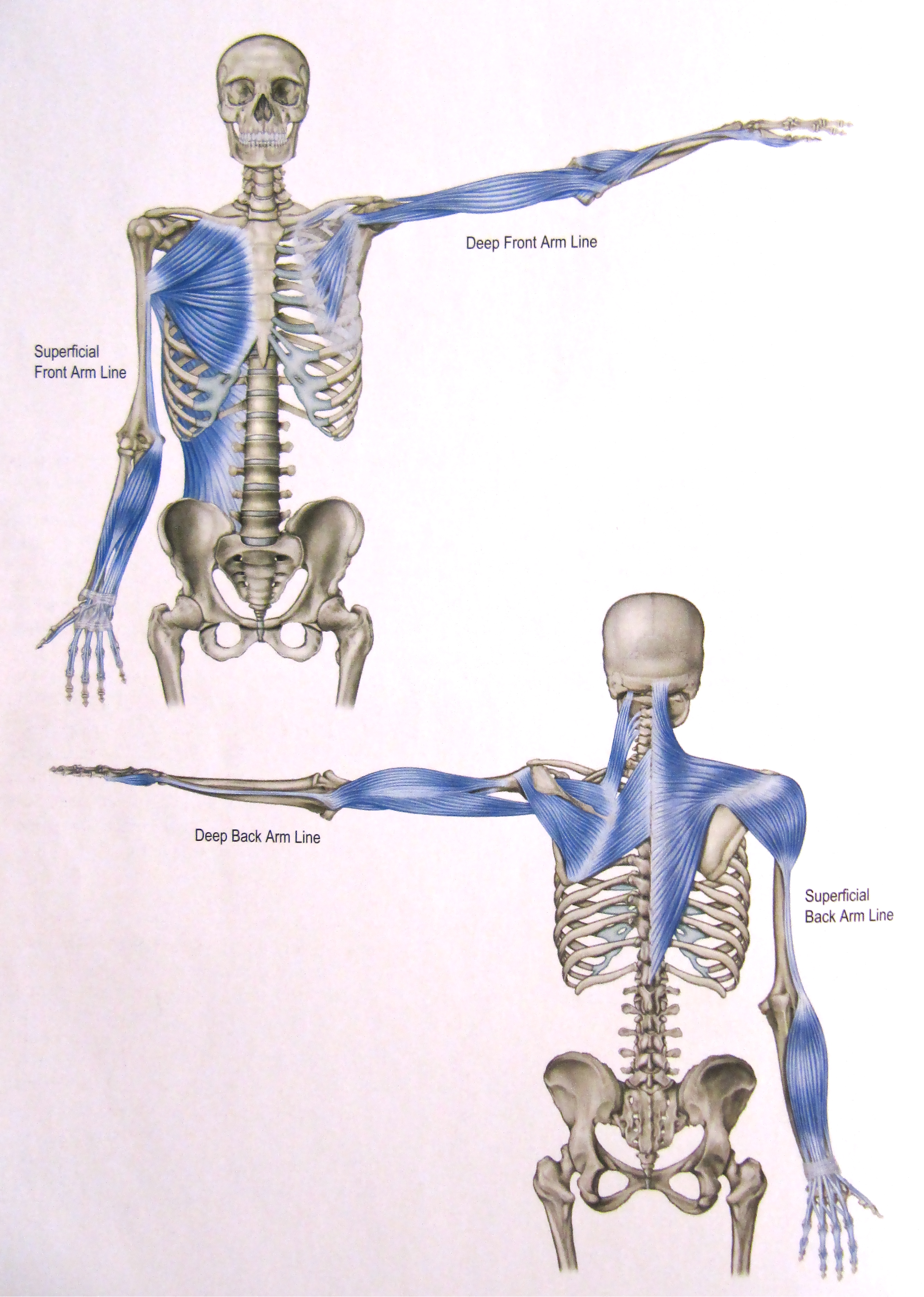


From Anatomy Trains: Myofascial Meridians for Manual and Movement Therapist - Tom Myers, 2nd edition.


Now, both of these stretches can be felt in many other locations - depending upon where you are have restrictions.  Biceps and the fascia of the arms are very common.  Both the Front Arm Line and Deep Front Arm Line myofascial meridians of the Anatomy Trains terminology are effected; and can be preferentially targetted if you know how.. different grip positions and strengths; different rotations of the humerus; different humerus to spine angles - and much more. 

[ Check out the 'Arm Line' article here:  http://www.anatomytrains.com/main/wp-content/uploads/2012/09/bodyreading1.pdf ]

Or just buy the new 3rd Edition of Tom Myers fantastic Anatomy Trains: Myofascial Meridians for Manual and Movement Therapists.  The second edition is on my 'Recommended Reading' list for a reason.. I'm looking forwards to checking out the changes to the new edition myself!

Honing in on the pec minor for a moment (and related soft tissues of the Deep Front Line - esp clavipectoral fascia; subclavius), we can see via the anatomy of the area why this region is a potent site for the blood vessels and nerves of the arm to be compressed against the hard tissue of the ribs; and/or tethered and adhered within the soft tissues of the region (neuro-vascular entrapment).

Magnify the percentage chance of this happening in relation to the degree of Forward Head Posture and all its spine, rib and scapula correlates.

The chapter on the pectoralis minor in Travell & Simons' great work Myofascial Pain and Dysfunction: The Trigger Point Manual mentions a number of clinical manifestations of pain and dysfunction related to this area, including: golfer's and tennis elbow; carpal tunnel syndrome; various arm pain, weakness and loss of proprioception; and pain, swelling and altered sensations in the hands and fingers.
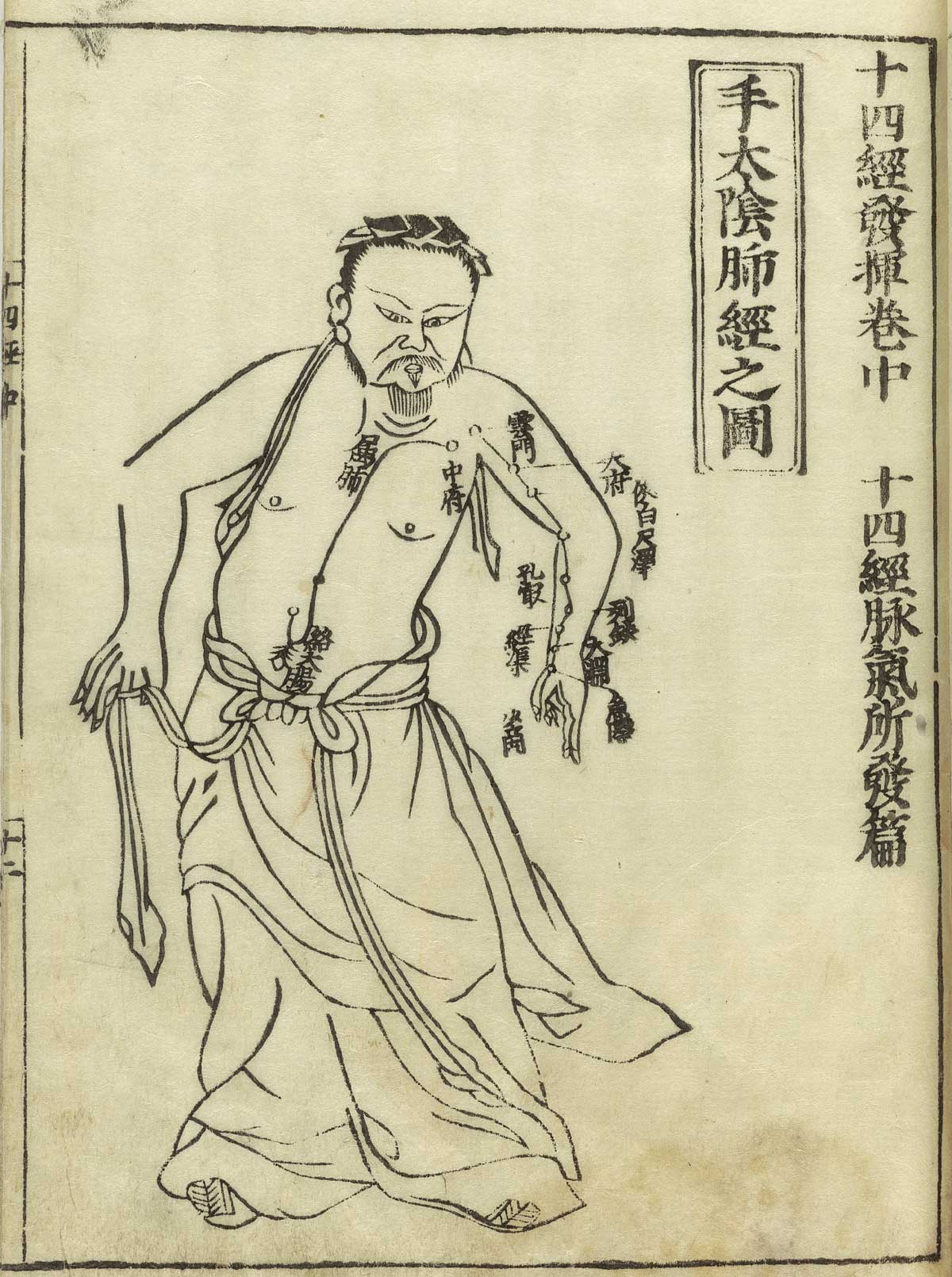
www.nlm.nih.gov

Taking a slightly wider, and more osteopathic/Daoist perspective (as I do); it makes sense to me that there could be(are) a wider range of inauspicious health, movement and sensory awareness impacts to having this area in a less than optimal state of soft-tissue texture and tone - even if these are 'sub-clinical' in that they have not manifested as pain or perceived dysfunction, yet. 

Reading up about the meridian pathways of Chinese medicine can be very insightful when focusing on the sensations coming about in the whole body whilst stretching certain areas and maintaining sufficient body awareness and a clear enough mind. This complements the classical western anatomy and new fascial anatomy nicely (add in the Ayuvedic/Marma perspective for bonus points). The organ-meridian systems are also useful in watching various pulsations and other phenomena that appear post stretch..play with it. 

Whether this is from a impingement upon blood-born nutrients or Oxygen (the primary nutrient) transportation; impediment of neural information; blocking of waste removal, or block of free flow of any other sort of information - the practical aspect of the effective re-patterning and softening the area is of primary importance in the Physical Alchemy method. 

I have a fair number of variants and enhancements to the Practitioner Hanging Fascial Pec Minor/Arm Line stretch (needs shorter title..), that I will be recorded in the near future - stay tuned! 

Monday, September 9, 2013

Fascial Lat Stretching and 'Opening Up and Awakening the Sides'


The flavor of the month (last month now) seems to be stretching, un-locking and re-modelling the tissues of the lateral aspect of the body..

I have recently uploaded 5 videos onto Youtube, of various stretches I have been playing around with for the lats and their associated soft tissues and investing fascia, and of the Lateral Line (and the 'Deep Lateral Line' connection of the QL --> Diaphragm --> Mediastinum --> Scalenes; if you are sufficiently body aware and supple already); Back Functional Line and Spiral Lines (using the myofascial meridians terminology of Anatomy Trains - see 2nd edition of the book for the fascinating details).

I had started to play around with different vectors of stretching the lats (and 'sides' more generally) when I had access to ladders bars for training (I think a lot of people stuff around hanging off ladders bars when they are available..there's something natural and human about it).

I was talking with Simon Thakur, a while back, about 'Opening up, strengthening and becoming more aware of the 'sides' of the body - and lateral movement, especially lateral spinal waves and undulation' which led me to explore this fascial and neuromuscular stretching (soft tissue remodeling) aspect some more.


Here are the videos:
Basic 3 Lateral Line and Fasical Lat Stretches
Video 1 (Basic Hanging Fascial Lat Stretch)
Video 2 (Spiral Lat and Hip Stretch from Modified Pigeon Pose)
Video 3 (Hanging Fascial Lat Stretch with Spinal Wave and Spiral Movement Enhancers)

[+1] Here's a great basic side stretch video by Stretch Therapy/Monkey Gym Senior Instructor Olivia
Video 4 - Liv teaches the kneeling side bend
The 'basic' side stretch can still work wonders on more advanced practitioners, if they have the body awareness and micro-movement control of the spine - aiming at as pure a lateral flexion as possible. 

[+1] Also, Check out Simon's Lateral Spinal Wave VIDEO

2 Advanced Fascial Lat Stretching Variants (Get comfortable with the easier versions before attempting)  
Video 5 (Advanced 'Spiral' Fascial Lat and 'Opening up the Sides' montage)
Video 6 ('High Hang' Fascial Lat Stretching)


Besides opening up the often restricted coronal/frontal plane of movement, these techniques remodel the soft tissues over, around, between and inside of the ribcage - thus freeing the breath*.

Along with specific breathing pattern and diaphragm work (pranayama; qi gong; butyeko; etc) this can tangibly increase, not only the movement capacity of the body, but the sensations of being alive and offers numerous health benefits, too.


Hanging!
Hanging is *awesome*! Whether it's from some ladder bars; a tree; a door-frame; a bus stop, or bar - it feels great and has a simultaneous strengthening of the deep grip muscles (if you actually grip the bar actively) and stretching/re-modeling effect on the lats and other pulling muscles, and on the various chains of fascia and connective tissue in the arms.

You can also get into the 'poplar tree' of the various 4th layer(? - iliocostalis group; etc) back muscles via adding different spiral vectors and directed breathing techniques - which is great, as these muscles are notoriously difficult to isolate in stretch.

Once you get a feel for how the greater tissues of the latissimus dorsi can be wound-up, you can create numerous variants which can be done off just about anything upright that is stable (pole; doorway; tree; etc), to varying degrees of success.


Spirals!
Spiral vectors from the legs, trunk and arms work very well.  Multiple spiral vectors works even better. You can 'play them off against each other' and wring the adhesions out of your soft tissues.  Interestingly, the latissimus dorsi (and pectoralis major; among others) has a twist (spiral) in the morphology the muscle.. perhaps this is why they feel so good to twist like a wet towel? 

For me personally, the feeling and observation of how the lats, pecs and traps get involved in the straight arm gymnastics holds (especially when you are strict with keeping the sternum up; so, not holding for maximal strength, which uses the hollow shape, but training for max strength-control from a position of postural alignment), I have wondered if what was happening was that I was learning to use the lats, pecs and traps, in essence, as a 'secondary rotator cuff' - by training them to stabilize and control a straight arm in various positions.. not sure how accurate this is, but a tangible re-patterning of the muscles occurs when you learn to do straight arm work ala gymnastics, and various other holds, in combination with traditional concentric/eccentric work -  or at least this is how I experienced it feeling in my own shoulders and arms.

This alignment (upper thoracic extension/sternal lifting with scapulas allowed to move down the rib cage) is often not possible for a person to maintain on the rings or paralettes for very long, or at all (or even in daily life, for some).

This is often related to daily postural and movement habits.  Sitting in a chair, and having the usually things happen (tighter hip flexors; collapsed ribcage and diaphragm; hyperkyphosis; scapula coming forward and around the rib-cage; etc.) tightens the latissimus dorsi in a specific way; and predisposes you to use only a discrete sector of this massive and variable muscle when you do you strength training exercises.

This discrete sector is usually the over-facilitated sector anyway, and leads to thick ropey strands appearing in the lats as vectors of force have connective tissue laid down in their paths. I have observed this a number of times with people into strength and conditioning work; boxing and other sports involving repetitive pulling.  Certain fibers of the latissimus dorsi are heavily preferences due to scapula position; rib-cage angle and spinal curves (obviously, and especially, thoracic). I am sure it is not everybody, but it is an interesting pattern. 

Finally, on stretching longer chains of fascia and connective tissue more generally, I have found that these long chain stretches respond well to a number of different methods - other than just standard contract-relax (PNF), as emphasized in the beginning and intermediate stages of Stretch Therapy classes.

Some of the 'enhancers' I use are:

• Mirco-movement exploration (lots of different easy to more difficult vectors - simple sagital plane work; rotations; figure 8's, spirals and waves)

• Directed Breathing (especially for muscles/tissues attaching to the trunk and ribs/abdominal area). 

• Outside Support (Tractioning & Bracing via partner assist).  This often uses a belt (judo belt or fabric sash for comforts sake) or manual assistences.


* The name of a blog post I am writing about a core fundamental of the Physical Alchemy system.