Wednesday, May 8, 2013

Book Review: Imagery in Healing - shamanism and modern medicine.


Imagery in Healing: shamanism and modern medicine by Jeanne Achterberg, is a great book on the history and philosophy behind the branch of health science commonly known as psychoneuroimmunology - or, basically, how mind & emotions impact upon the nervous and immune systems.  The book could be considered a 'core' text for Stretch Therapy modality I practice, having been part of the recommended reading since the early days.  

Although a few years old now, this text provides a fascinating introduction to the use of healing imagery throught-out history, and gives insight into the (then) current scientific research into how some of these practices and techniques are processed in the body.

Starting with shamanic techniques of altering consciousness for healing; through Asclepian dream therapy in Greece; the use of the imagination in the Middle Ages; then on to the 'dark ages' of this type of healing, which has been from the Renaissance until fairly recently - and finally offering new uses and new/old hybrid research ideas.

This book contains some seriously fascinating and essential information on health.  I can remember this being one of the first non-fiction books I actually enjoyed reading.  The book is worth buying/borrowing for its discussion on placebo and nocebo alone - and the case studies that go with it.

The research into the context of healing, illness and imagination across cultures has some very interesting implications; some of which can be adopted quite easily and beneficially by lay-people who have enough creativity and pro-activity.  I'll leave you with a tantalizing quote:


"Further evidence for the role of the imagination in disease comes from studies showing that those that cannot comprehend the messages conveyed by society and its medicine die of different causes than those who can." Imagery in Healing, Jeanne Achterberg, page 79.


Fuck it

THIS cracked me up! :)  Worth the 1:06 of my life for a laugh or two. 


Tuesday, May 7, 2013

Shoshin

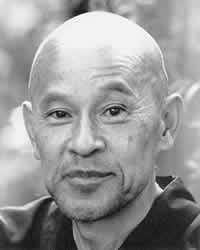
"In the beginner's mind there are many possibilities; in the expert's mind there few." Shunryu Suzuki (above).

Shoshin, or Beginner's Mind, is a phrase from Zen Buddhism to describe the state of child-like eagerness, wonderment and playfulness that comes when the mind is not labeling things and events (especially ones we are familiar with) - when we are just experiencing them, as if for the first time.  

When I read the above quote from Zen Master Shunryu Suzuki, it struck a deep chord within me (much the same as Bruce Lee's 'Accept what is useful; discard what is not useful' quote did in my childhood).  

Cultivating the shoshin state is very useful for people into expert generalism (and, well, everybody), as it helps maintain humbleness, playfulness and prevents the dreaded statement 'I already know that' from occurring too much (even if you do have knowledge of the specific topic, or have done the physical skill many times. It's the closed attitude that is poisonous to creativity.).  

Interestingly (for me at least), having been cultivating this attitude for a number of years (and along with Zen and various other practices); I have come to the conclusion that boredom doesn't exist.  This would have severely baffled my younger self, as I spent many, many hours of my adolescence sinfully bored and apathetic to just about everything. What I mean by 'doesn't exist' is, boredom is solely self-created and exists within the undisciplined mind alone.  I haven't felt bored since about 2007 (when practice commenced).  It's well worth investigating.  

The boredom also has a selfishness element to it, I personally found.  'I' am bored; because I deserve for something more interesting to be happening to me at this given moment (normally with another thought that this fun/fascinating thing should just appear before me, with no work on my part).  With practice, just sitting and watching people walk past; clouds go by and wind blowing through trees; stars at night, or even grass grow, can be extremely rich and joyful experiences.  

With regards to physical training of different types, the beginner's mind is a useful tool for getting past plateaus, and re-discovering the joy that one often has the first few months/years of an activity (when one is often in a state of embodied awareness), that tends to drop away just as you are going to make a breakthrough to a new level of skill and awareness.  

Moreover, in regards to the great quote mentioned in the Swing post, keeping the beginner's mind helps you play through life!  I've been lucky enough to meet people of advanced chronological age who have an inquisitiveness and wonderment that would put most of today's kids to shame.  That will be me.  And it should be you, too. 


Monday, May 6, 2013

The strategic use of DOMS

Previously I wrote a post about practicing body awareness and movement patterning whilst moving about, well, pretty much anywhere. Something I do to enhance this, is to also make use of is Delayed Onset Muscle Soreness (DOMS) when I have it (not too often), as a proprioceptive enhancer.

Some fascia research I read recently suggested a rename to DOFS (Delayed Onset Fascia Soreness); and argues that DOMS is not a lactic acid event, but rather caused via substance P (pain chemical) being release from micro-trauma to fascia with-in and around muscle bellies. See HERE (page 4).

So, say you have done an intense session of deadlifts, barbell hip thrusts or some other hip extensor dominant posterior chain exercise - and get some serious glute tenderness.  You can complain about this; laugh about how it hurts to sit down, and/or use the enhanced sensation coming from the glutes to enhance the information coming from the body as you walk up and down stairs.

You can also do slow and smooth movement patterning work of skills whilst using the enhanced feedback from the enhanced sensory awareness within the muscles.  If you have DOMS, you may as well use it for something, right?


Sunday, May 5, 2013

Ode to Forearm Training


Being a massive Bruce Lee fan since I was 7, naturally I wanted epic, rippling forearms (especially the extensor bellies visible in the picture above!).  Nothing says you mean business like big, rippling forearms...just what business, exactly, is up for mass debate.   

Forearm training seems to be quite the martial arts meme (somewhat independent of stylistic differences), perhaps because large, well-defined forearm muscles have a connotation of grip strength and power; hand dexterity (possibly subliminally extrapolated into skill with bare hand grappling and striking; sticks; clubs and bladed weapons) and general hard training done involving the arms and back muscles.  

Size alone is impressive! My original far, far away goal was 15 inches diameter (currently ~11 3/4 - 12 inches diameter), but I've revised my medium term goal to 13 inches.  Size, definition and functionality trump size alone.  Some combination of medium-high levels of size, definition, functionality, suppleness and tissue quality, awareness and skill would be the gold standard, IMHO. 

The forearm compartment contains roughly 20 muscles; plus/minus the palmaris longus, which is anatomically absent in about 1 in 10 people.  I've still got mine, so I like to think of myself as closer to my palmar fascia-tensing, tree-swinging ancestors. 

The complicated insertion and arrangement of the muscles, nerves, blood supply and soft tissues in the compartment goes with the complexity in manual dexterity of the hand (a lot of the finger moving muscles originate in the forearm compartment), and linking this to the arm and torso muscles in kinetic chains.

This complexity also means there are different types of strength and co-ordination associated with the forearm and hand muscles; with some people excelling in one or a few types, whilst sometimes being relatively weak in other capacities.

Continuing my generalism theme; I personally work on trying to get a good balance of strength in all the different muscles and work on ever-improving movement quality and skill of the hand, and arm.  The common pattern is a need to strengthen the finger and wrist extensors to balance the dominant flexor groups and off-set the anatomical advantage and habitual over-use (typing; gripping steering wheel; writing; furious masturbation; etc).

From a Spatial Medicine perspective, I also try to keep soft tissues supply and healthy, and work on having a uncompressed vascular supply and mobile peripheral nervous system from brainstem to brachial plexus, down the arm to finger innervation. 

Back to the strength capacity for a second; when looking at getting balance between the flexor and extensor compartments of the forearm it is interesting to think about 'flexor addiction' more generally, for a moment - as this passage from the classic Body & Mature Behavior - Moshe Flexdenkrais illustrates nicely:


"This pattern of flexor contraction is reinstated every time the individual reverts to passive protection of himself when lacking the means, or doubting his power, of active resistance.  The extensors, or anti-gravity muscles, are perforce partially inhibited. According to my own observation, all individuals classified as introverted have some habitual extensor rigidity...We have seen that such passive safety is brought about by flexor contraction and extensor inhibition. Voluntary directives inhibiting the extensors are therefore observed in all emotionally disturbed persons. In the long run, this becomes habitual and remains unnoticed.  The whole character is, however, affected.  The partically inhibited extensors become weak, the hip joint flexes, and the head leans forwards." Body & Mature Behavior - Moshe Feldenkrais, p 127-128.  

Look out for my 'Fry the forearm extensors with a wrist-roller for deep inner peace and emotional tranquility™' DVD; in stores now! ;-D  
Specifically now, the finger and wrist extensors are much weaker than the flexors in most humans I have encountered - even the very strong. So, training them more often and more intensely is indicated (they are smallish muscles, so 'hard training' within reason..coupling strengthening with PNF stretching works well in my experience - same with fascial soft tissue work).  

Often I find people can work on supplemental exercises for the extensors for a while by themselves - and let the flexors get their strengthening via gripping equipment during the training of other, larger back and arm muscles.  

Interestingly, Kit and I also found that in the Monkey Gym, people would improve, sometimes dramatically, at all types of upper body strength moves when the ratio of wrist and hand extensors was changed more favorably towards a balance between flexors and extensors.. it is almost as if the brain is limiting the performance of the whole limbs' strength based on a sense of instability/torsion created via the large discrepancy between strength of reciprocally inhibitive muscle groupings..  I have heard other people talk about this, too. 

Specific flexor work can, of course, be added as there seems to also be something happening with the different levels of forearm flexor compartment activation a fair amount of the time (i.e people seem to preference superficial or deep compartment musculature, and can be weak and have very poor tissue quality in one section and still perform very well in a lot of activities - so the imbalance can go unnoticed).  

I really think there is something interesting happening here (and in the lower leg and neck compartments) - with the deepest compartment muscles often being 'off', or having sensori-motor amnesia; and/or, there being a lack of coherence between inner and outer layers of muscles in terms of functional and structural roles. 

When looking at training methods for the forearms, I look at the type of people who have the desired attributes (size; strength; definition; control; awareness; etc.) - and found some interesting results!  

There were the expected groupings of martial artists; boxers; rock-climbers; arm-wrestlers and strength athletes, and the like.  Then the manual laborers and farmers (often with exceptional functional capacity, endurance and strength to go with size - or in spite of relative lack of diameter).  

A finally the unexpected - Granny!  I kept seeing old caucasian women with massive forearms, and couldn't place it at first.. then I picked up an old caste iron pan - motherfucker was HEAVY!  I am in the processing of re-framing dish washing and cooking as 'forearm strengthening and wrist mobility' sessions.  It never stops...


..Nice work Dave.. Epic forearm blog, and only two masturbation jokes! You've done well. 


Saturday, May 4, 2013

Bodywatching at 30,000 ft

Maaan; flying is not good for the tension levels in the physical body.  Every time in the past, that I have had a flight over 3hrs in length, I have felt ill effects from it.  There are many aspects to this, to name a few: the cramped, movement preventing, and hip flexor spasmin', seats (in economy at least); the recycled, dehydrating air-conditioned air; the particles of other people's illness floating around in the cabin. 

Having recently flown to Chicago (from Sydney) and back; I used the experience to, among other things, to continue my exploration of how tension builds in the body during flight.  Luckily, too, I found a bar about a foot and a half above head height outside one of the toilets; to do some mid-flight hanging RollStretch style fascial lat stretching, with breathing enhancers to create additional vectors (more details soon).

Between this, and standing up every 1hr or so to do some limbering, joint mobility or other tension release practice; I no doubt looked quite odd to whoever was awake/sober enough to notice.  On an unrelated not, I watched The Hobbit on the plane at about 2am after a rushed, and stressful day and some red wine and was wiggin' out during the movie (something appeared oddly surreal) - later I checked and found it had some new semi-controversial frame rate.

During one of the legs of the flight, in the wee hours when hardly anyone was awake, I was playing with mobility exercises for the jaw.  Some of them felt quite nice (though look quite foolish), and I'm hoping to film them soon, to post up. 

I normally spend about an hour post 3hr+ flights in the hotel ironing the kinks out of myself via: various types of stretching & re-patterning work; joint mobility; relaxation and rolling around on tennis balls.  A lot of the awareness of how out of whack my body is comes from the enhanced sensory awareness of my internal landscape gathered through various practices and refining the embodiment of the Stretch Therapy approach over the years.

I actually get my old lower back pain back if I sit for more than 3hrs (sometimes driving Sydney - Canberra does it).  Something that used to cause me a fair amount of grief takes one Stretch Therapy style hip flexor stretch to remove completely - kinda cool. 

It also makes me wonder what ends up to all the neuromuscular tension gathered by people who are, for the most part, bodily unaware and do not do any specific movement practices for their bodies pre-flight; during flight and post-flight..

On a positive note, having my 1 year old daughter with me allowed me to get the seats the row behind premium economy, that have extra leg room (as the bassinet inserts into the 'wall of segregation' between the seating classes).

You can also get a nice neural flossing position by placing your feet flat on this wall, and using cervical and capital flexion-extension and spinal wave motions to mobilize the nervous system (practice very gently and low volume if you can figure it out) - don't fall asleep in this position!  


Friday, May 3, 2013

Mini-Club Mobility Refresh


So I brought home a small 5lb club to play with..(also of note in the photo are the awesome Minimus shoes I picked up from the States for $50).

There is some specific rotator cuff, forearm/wrist/elbow and throwing pattern drills I want to use it for, but mostly I just want it laying about - so that I can get a lot of volume of weighted joint mobility and movement training in throughout the day.

Today is the first day of the test/play.  I've been doing mobility work in small, exploratory sessions of 1-3 exercises for about 5 minutes maximum, throughout the day.  It feels like it's going to work well as a 'refresh' between other activities, or as a 'bridge' when I get irritated by something and need a change.   

Anyhow, I'll let you know how it turns out.  I'm already getting that itch of wanting to pick it up off the couch whenever I see it..  going to start off with about 5 x 5 minute sessions, and see how that feels.  I'm already getting that processing large amount of novel//new movement patterns feel you get at workshops, and the like.

Check out Kit's 'Scatological' post for today, if you haven't already!